Arabic, Modern Standard (ISO-Code: ARA)The examples below illustrate the synthetic character of Standard Arabic. Furthermore, it is obvious that Arabic exhibits the VSO word order in main clauses:
| ||||||||||||||
 الكتاب
ChatGPT
(Generated by ChatGPT-3, 15 March 2023, post-edited by J. Handke) |
 ChatGPT is a large language model developed by OpenAI based on the GPT (Generative
Pre-trained Transformer) architecture. It uses deep learning techniques to generate human-like responses to natural language input. ChatGPT is trained on massive amounts of text data, allowing it to understand and respond to a wide range of topics
and questions. As a language model, ChatGPT can be used for a variety of tasks, such as text generation, translation, summarization, and question-answering. ChatGPT is a powerful tool for natural language processing and has the potential to be used
in many applications, including chatbots, virtual assistants, and customer service automation.
ChatGPT is a large language model developed by OpenAI based on the GPT (Generative
Pre-trained Transformer) architecture. It uses deep learning techniques to generate human-like responses to natural language input. ChatGPT is trained on massive amounts of text data, allowing it to understand and respond to a wide range of topics
and questions. As a language model, ChatGPT can be used for a variety of tasks, such as text generation, translation, summarization, and question-answering. ChatGPT is a powerful tool for natural language processing and has the potential to be used
in many applications, including chatbots, virtual assistants, and customer service automation.
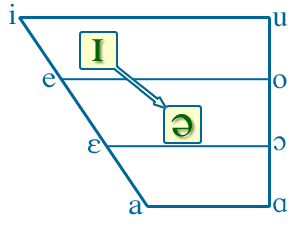
Diphthongs, Centering/InglidingDiphthongs are defined as centering or ingliding if a movement of the tongue from a peripheral to a central position occurs.
|
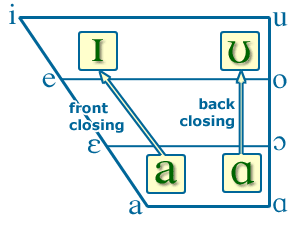
Diphthongs, Closing/UpglidingDiphthongs are defined as closing or upgliding if a movement of the tongue from a low or central to a high (closed) position occurs. There are two variants of closing/upgliding diphthongs:
|
German, Standard (ISO-Code: DEU)The examples illustrate the synthetic fusional character of German. Furthermore, Standard German exhibits two word order patterns: SVO in main clauses and SOV in subordinate clauses:
| ||||||||||||||
 das Buch
Japanese (ISO-Code: JPN)The examples below illustrate the strong agglutinating character of Japanese. Furthermore, it is obvious that Japanese exhibits a strict SOV order irrespective of the sentence type:
| ||||||||||||||
 その本
その本Linear Ordering - Parameter Settings for PDE
Heads are in boldface, modifiers appear between square brackets [ ]. | ||||||
Low Back MergerIn Canadian and many regional variants in Northeast America, the phonemes /o/ and /oh/ have merged, so that cot and caught, Don and dawn, hock and hawk, collar and caller, are all homophones. This 'cot-caught merger' is complete in Canada, the West, Western Pennsylvania and Eastern New England. |
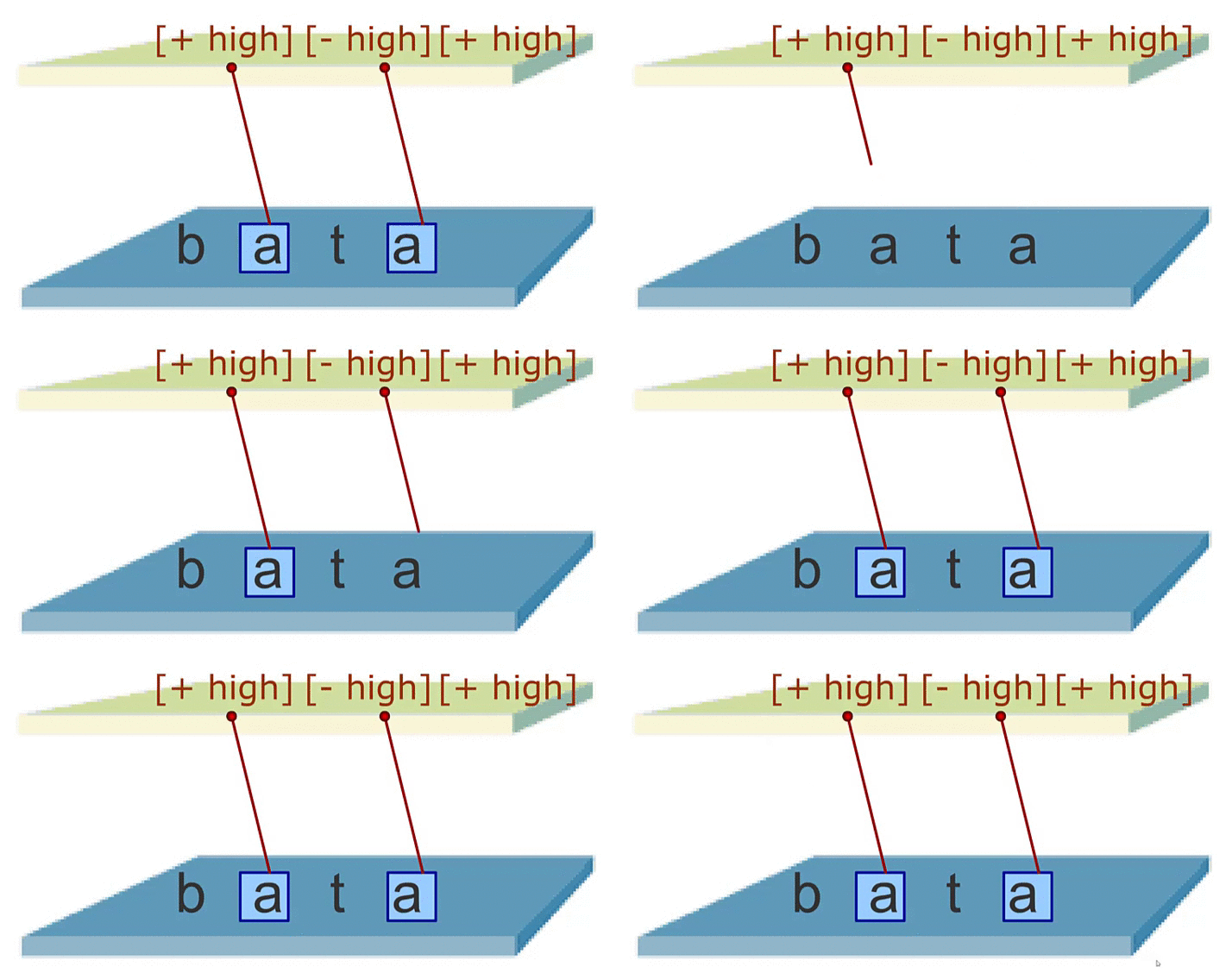
NL-Phonology: The Dumping Principle
If after the application of mapping some tones are still free, they will be linked to the last vowel to the right. |
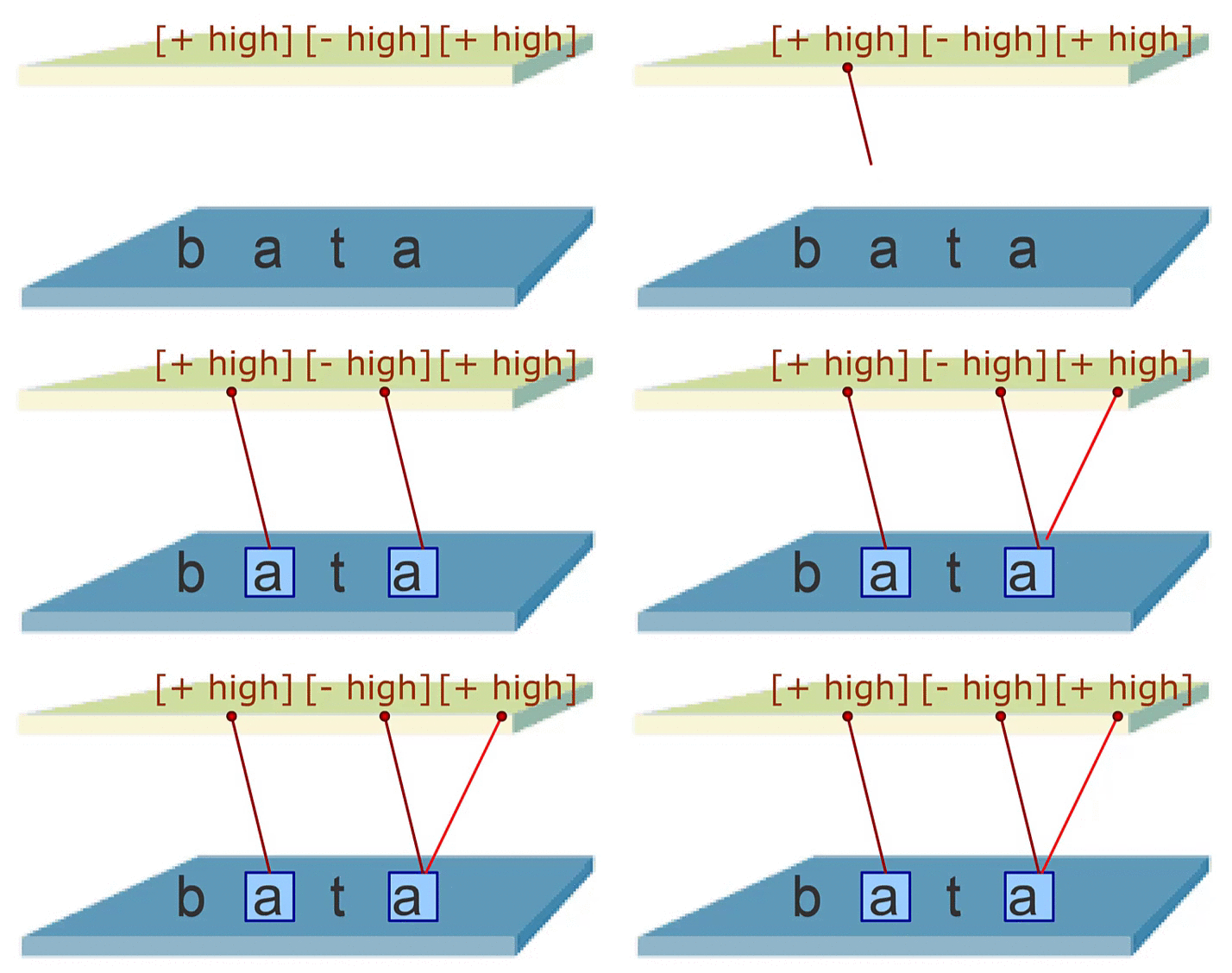
NL-Phonology: The Mapping Principle
The mapping principle associates vowels with tones in a 1-to-1 fashion from left to right until we run out of vowels or of tones. |