
This open online course provides an introduction to the foundational concepts, genres, and techniques of literary studies. It explores the historical evolution of literature, key narrative and poetic forms, and the interplay between language and storytelling. Students will engage with critical theories, world literature, and drama, developing skills in literary analysis and interpretation. Practical strategies for teaching literature are emphasized, alongside an examination of literature's cultural significance and its adaptation in the digital age. By fostering analytical and pedagogical expertise, the course equips students to inspire and guide learners in appreciating and understanding the richness of literature.
The course can be used as an overview to more detailed courses on literary studies. It consists of 12 content units and involves a workload of 90 hours.
This open online course provides the data to explore the development and key themes of children’s books from the origins of British storytelling traditions to contemporary works. It begins with an overview of traditional fairy tales and folklore, examining their influence on early children’s literature. The course covers major historical periods such as the Victorian era, the Golden Age, and post-war literature, highlighting key authors like Lewis Carroll, Beatrix Potter, Roald Dahl, and J.K. Rowling. Themes of fantasy, adventure, morality, and diversity are examined, along with genres such as animal tales and poetry. The course concludes with an exploration of modern trends, including the rise of young adult fiction.
The course provides 12 content units and involves a workload of 90 hours.
LIT508 surveys British narrative literature from its beginnings in the 18th century to the present, with attention to earlier literary contexts, such as 17th century epics. It introduces criteria for novel analysis, provides historical and cultural contexts, and explores major developments in prose fiction, satire, fantasy, children’s literature, and contemporary narratives. Authors and works range from Daniel Defoe, Henry Fielding, and Jonathan Swift via Jane Austen, Charles Dickens, and Lewis Carroll, to James Joyce, Virigina Woolf, J.K. Rowling, Zadie Smith, and Derek Walcott.
The course consists of 12 content units and involves a workload of 90 hours.
This course provides a comprehensive overview of the development and diversity of British drama over time, focusing on influential playwrights and cultural shifts.
The course can be used as an overview to more detailed courses on individual phases of British literature as well as an introduction to literature in general. It consists of 12 content units and involves a workload of 90 hours.
- Teacher: Vincent Hornik
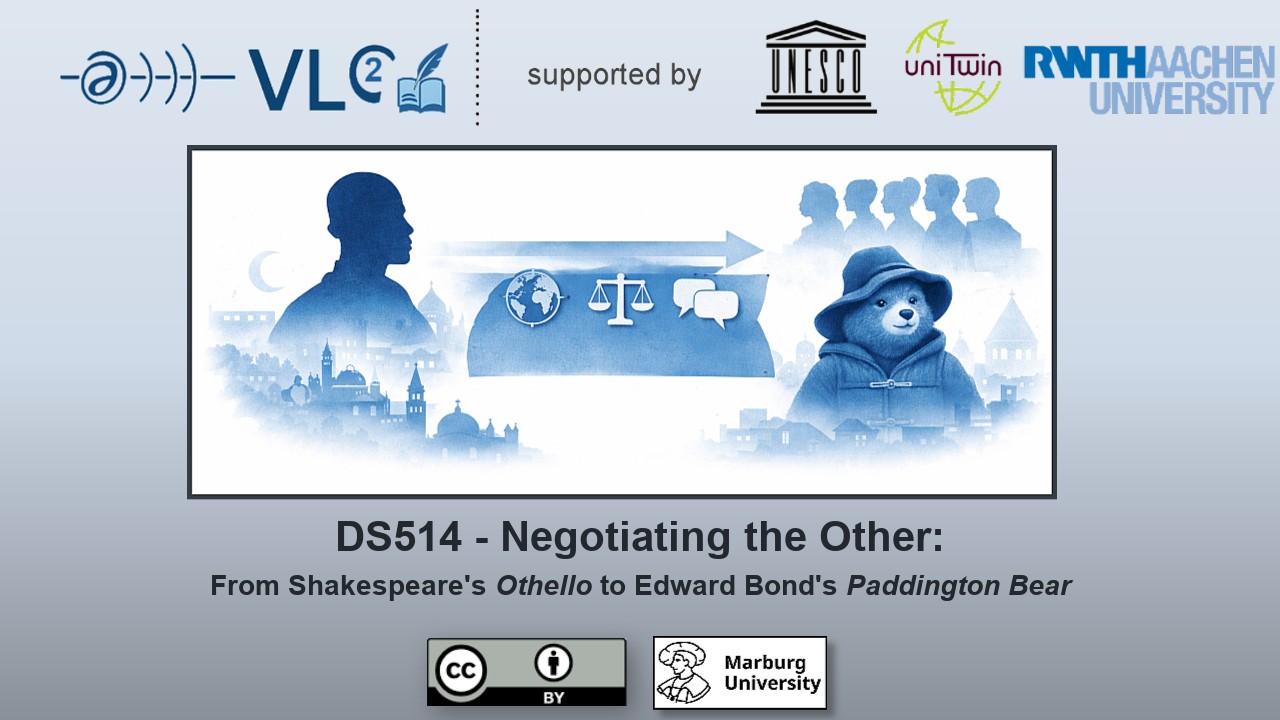
This digitally supported course explores the (postcolonial) phenomena of (non)-belonging, difference, exclusion, marginality, authority, and humanity, and this from the early modern period to the present. Set against the theoretical approach of postcolonialism and seminal studies such as Edward Said’s Orientalism, the seminar starts with William Shakespeare’s dramas Othello and The Tempest tracing racial, cultural and colonial otherness by addressing fear and fascination, but also violence directed at those deemed different. Proceeding to the 18th century, we will address Daniel Defoe’s novel Robinson Crusoe (1719) marking colonial otherness in the making of ‘Friday’, followed by Charlotte Bronte’s novel Jane Eyre (1847) and its construct of Bertha Mason as colonial and mad “Other”. The 20th century will be represented by Edward Bond’s beloved A Bear Called Paddington (1958) and its polite and kindhearted anthropomorphized bear “from darkest Peru,” who has a seemingly endless capacity for innocently getting into trouble in a world whose social and cultural codes are unfamiliar to him
The course provides data for 10 content units that should be supported by 6 to 12 in-class meetings.
- Teacher: Vincent Hornik
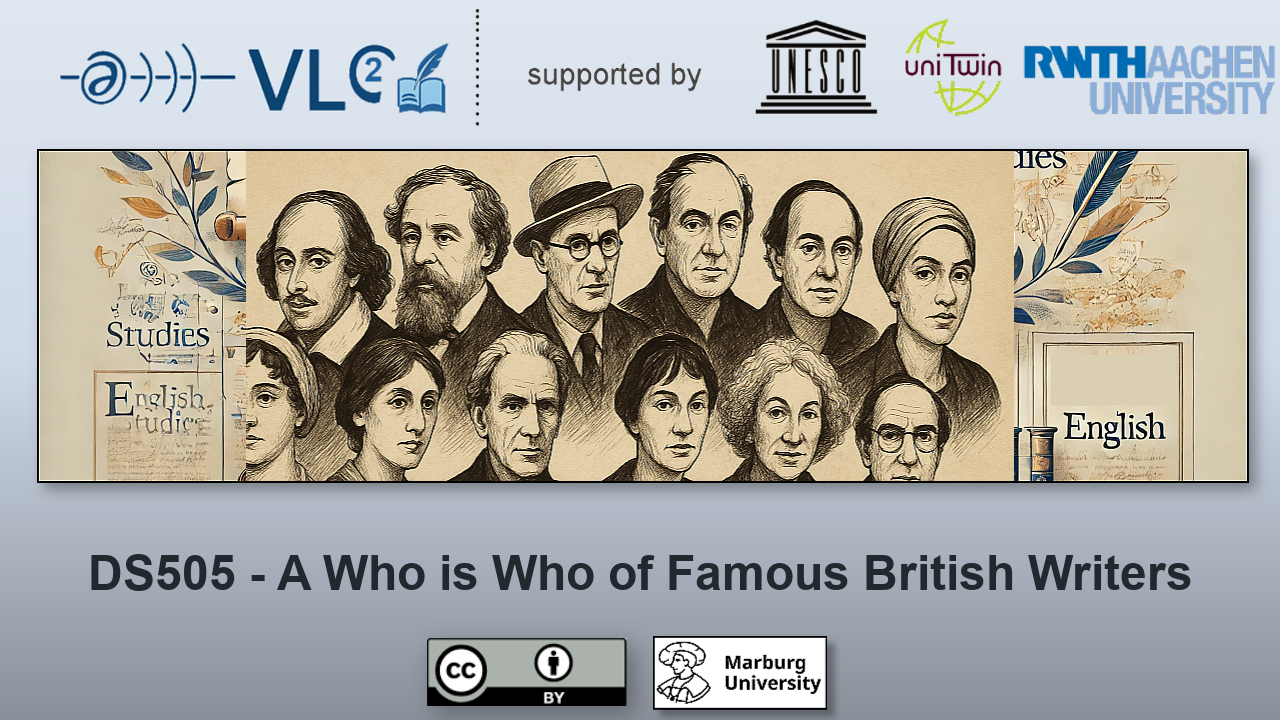
Given a literary history of more than 500 years, it seems rather adventurous to narrow British writers down to a ‘Who is Who.’ Nevertheless, this AI enhanced open online course ventures to do so in the hope of giving students a brief orientation and overview of major authors and titles of British literature throughout the centuries, and this in the genres of drama, narrative, and poetry.
The course consists of 12 content units and involves a workload of 90 hours.
- Teacher: Vincent Hornik
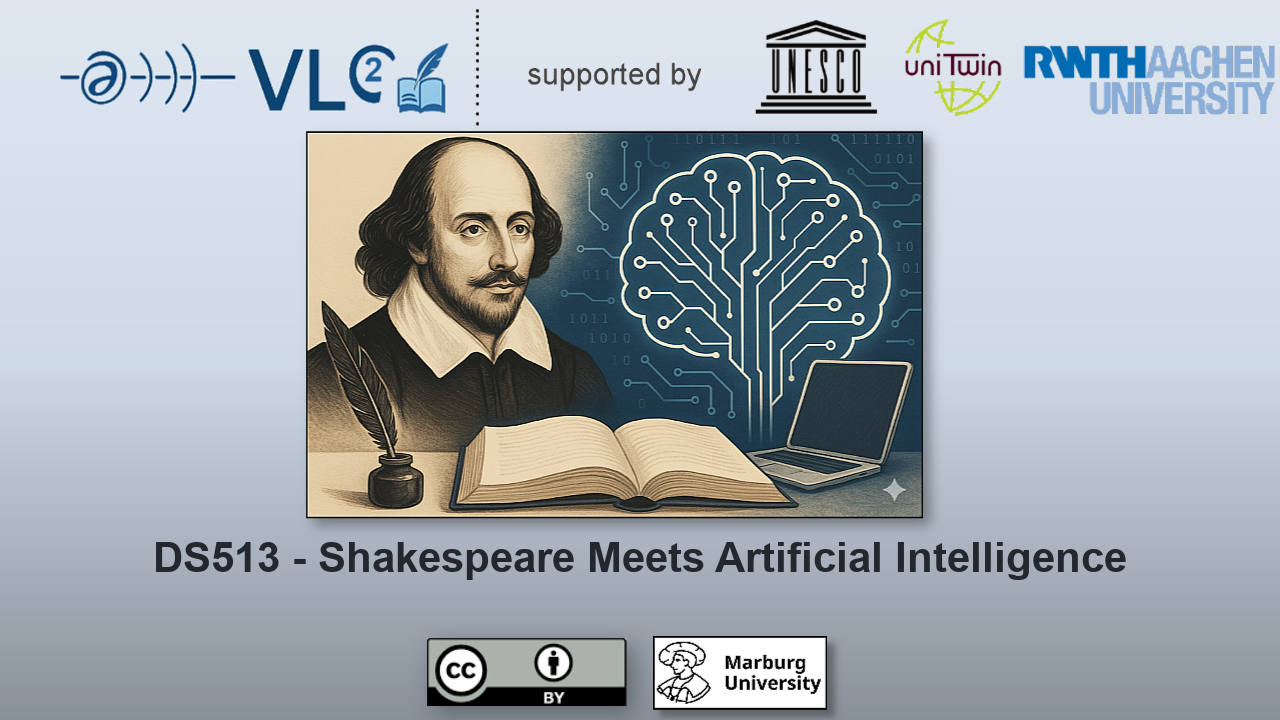
This digitally supported course explores how AI reshapes our engagement with Shakespeare’s works through critical inquiry and creative experimentation. Focusing on Othello, Twelfth Night, and Richard II, students investigate digital close reading, AI-assisted performance, canon revision, and co-authorship. Core topics include machine learning, bias, and rhetorical analysis. Blending theory and hands-on tools, the course fosters new interpretations and productions of Shakespeare while challenging traditional approaches to literature, authorship, and the role of the humanities in a digital age.
The course provides data for 12 content units that should be supported by 6 to 12 in-class meetings.
- Teacher: Vincent Hornik